František Roith
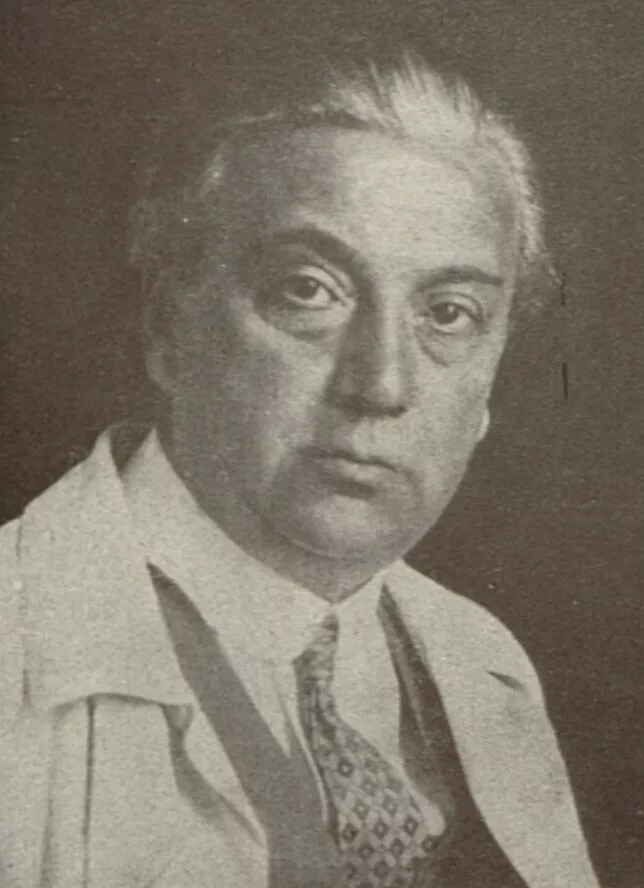
The architect František Roith was born in Pardubice on the 16th of July 1876. After completing Realschule in his home town, he enrolled at the Czech Technical University and also at the German Technical University in Prague with the architect Josef Zítek. Later, at the Academy in Vienna, he was a student of the renowned Austrian architect, urbanist and architecture theoretician Otto Wagner. It was only after the year 1905 that František Roith started his own independent architecture activity. Among his first realisations were the private houses of affluent clients in eminent Prague neighbourhoods (e.g. in Ořechovka) and Prague surroundings – in villa areas in Černošice and Jíloviště. Roith also demonstrated his artistry in Olomouc and Pilsen. As early as in the first decade of the last century, he was successful at an international level as well when coming third with his competition design for a theatre in Riga, Latvia. He gained more experience preparing technical constructions – a tilting weir near Mělník (1910) and a road bridge in Nymburk (1912).
After WWI, František Roith established himself as the architect of a range of public buildings, especially banks, savings banks and ministries. These usually monumental, yet rationally conceived buildings are characterised in particular by Classicist facades conforming to order and symmetry, with the rhythm given by a grid of windows and a row of pilasters clad in noble materials often completed by figural or relief sculpture decorations. His Prague realisations include the building of the Ministry of Agriculture in Prague–Těšnov from the years 1925–1932, the Ministry of Finance constructed in the years 1926–1934 in the Prague Lesser Town, and the Post and Cheque Office on Wenceslas Square realised in the years 1926–1931 and used by Komerční banka today. The complex of the Municipal Library on Mariánské Square ranked among the most modern buildings in Europe of its time (built between 1925 and 1928), with an interior in which Roith applied art deco elements. The large structure of Živnostenská banka from 1928–1938 is another example of cutting edge architecture of this type. This building near Republic Square is today used as the headquarters of the Czech National Bank.
In the 1920s, Roith also worked on designs of technical buildings – in 1923 the weir with a lock and a hydro-electric power station in Nymburk, a design that was a collaboration with the engineers Bartovský and E. Zimmler, and, four years later, the construction of Masaryk Bridge in Kolín (the original bridge piers were designed by Antonín Engel in the year 1913).
In addition to Prague, Roith designed prominent public buildings for other Czech cities. For Brno he designed the Mail Telegraph Directorate Building, while Pardubice boasts his Municipal Savings Bank. In Pilsen the Rašín House (C1–1760) was built between 1924 and 1927 – a building of tax offices bearing the name of the first Czech Minister of Finance. After the establishment of the Pilsen Region in the year 1997, this object began to serve the Regional Authority of the Pilsen Region. The shift of this conservatively minded architect towards Functionalism is evidenced by his second Pilsen realisation – the apartment and office building of the Prague Municipal Insurance Company on Goethova Street from the years 1935–1937 (C1–356J).
František Roith died after years full of creative work in the midst of the war years in 1942 in Voznice u Dobříše. He was buried at the Vinohrady Cemetry in Prague.
LR
Architect
František Roith
Date of birth
16.07.1876 Pardubice
Deceased
18.05.1942 Voznice u Dobříše
Literature
Petr Domanický. Budova finančních úřadů (tzv. Rašínův dům, dnes Krajský úřad Plzeňského kraje). Plzeň. Průvodce architekturou města od počátku 19. století do současnosti. Plzeň, 2013. p. 141–142.
Petr Domanický. Obytný a obchodní dům Pražské městské pojišťovny. Plzeň. Průvodce architekturou města od počátku 19. století do současnosti. Plzeň, 2013. p. 149.
Petr Domanický. Vila profesora Hynka Pášmy. Plzeň. Průvodce architekturou města od počátku 19. století do současnosti. Plzeň, 2013. p. 214–215.
Bohumil Hübschmann. Architekt František Roith. Architektura. 1942. IV. p. 201–202.
Jaroslava Lencová. heslo Roith, František. Nová encyklopedie českého výtvarného umění (dodatky). Praha, Academia, 2006. p. 687.
Zdeněk Lukeš. Ladislav Skřivánek. Umění. 1988. XXXVI. p. 83–85.
Rostislav Švácha. Od moderny k funkcionalismu : proměny pražské architektury první poloviny dvacátého století. Praha, 1985.
Pavel Vlček. heslo Roith, František. Encyklopedie architektů, stavitelů, zedníků a kameníků v Čechách. Praha, 2004. p. 552.
Archindex. Roith, František. http://www.archindex.cz/index.php?id_firmy=91&stat=CZ&ZobrazRegion=true&Neobsah=1&NePoukazky=1&nazev_regionu=
Wikipedie. František Roith. http://cs.wikipedia.org/wiki/Franti%C5%A1ek_Roith